
kbrecordzz
Home - About - Contact - Overview
🔗 This Is (NOT!) A Car Club - 🔗 kbz.se
* Company diary *
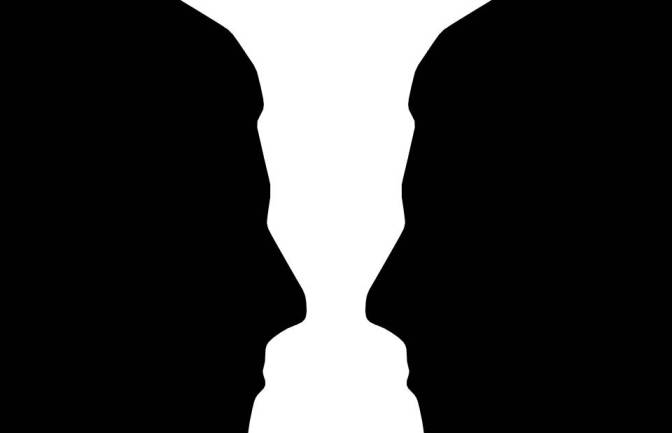
Deepest down of reality is feeling and memory. This is what consciousness consists of, or contains, in its simplest sense. Without these two, it doesn't make sense to talk about a reality because you won't experience it. You always feel something, and you can only know you've been conscious if you remember it. You may be conscious during deep sleep and after death but it really makes no sense to talk about it if you don't remember it.
Within consciousness are two ways of experiencing, or you could call them two "planes" or "screens" inside your consciousness. All experience isn't visual, but it's easier to understand if we talk about them as two visual screens in front of you, so I'll focus on vision here. One of these screens shows clear, bright colors that are tangible and fully visible, while the other screen can show images in front of you, but they're not visible in the same clear, tangible and colorful way as in the first screen. This first screen is where your sensory input most often ends up, so we intuitively think of this primary screen as where the outer physical world plays out. The second screen is "the mind's eye", where imagination, sudden memory flashes and more abstract thoughts take place. It's that weird plane of vision that's so hard to make sense of but so obvious for us who have it, where we see things but still not see them in the same "real" sense as when we see "real" things.
Impressions both from our senses and from the mind's eye are at first not interpreted at all. But by focusing on one part of your reality you get more information from it, and you can start to make sense of it. Our visual field looks the most clear right in the middle of where we're looking, and then gets more and more blurry the further our in our visual field it goes - our focus is very limited and we never make sense of everything our impressions take in. The parts you aren't focusing on get filled in the best they can by memory, which makes us experience the objective world approximately, interpreted and personally. This means that what we see outside the center of our focus isn't an exact reality but more of an educated guess and a general feeling of what it looks like. And these guesses don't come from the outer world, but from the inner world. So, even if we can symbolically represent the outer world and the senses with the first clear and tangible screen, and the inner world with the second "mind's eye" screen, the first clear and tangible screen almost always has a mix of both sensory impressions and impressions from the inner world.
You can only focus on one or a few parts of your reality at once. Your normal daily understanding and experience of the world, where it feels like you experience your whole surrounding and personality at the same time, depends on you moving your focus back and forth all the time between different parts of your reality. If you try to think of some time during today when you just looked at one thing, thought about one thing and didn't move, that probably didn't happen, because you always move around your focus because you need that to understand the world. By switching your focus naturally like this, you get information from different parts of your reality and can understand the different parts, divide your reality into concepts and make them make sense both individually and together by figuring out how they relate to each other, and this makes you experience your reality as a connected whole that makes sense. If this sounds technical and weird, like something you aren't doing, that's because this daunting and multitasking task is what makes life feel normal, it's just another way to describe "living a normal day".
The two main concepts you create to understand your reality are probably the ego, and the world (what's outside yourself). The ego is your identity, your personality, and it includes both your inner world with all its thoughts and your body (and maybe also the things you've done and made, what other people think of you, your legacy, etc). The ego separates yourself from the rest of the world, where you start identifying with your inner thoughts and your body, while you don't identify with your sensory inputs - they are part of the rest of the world, that which isn't you.
Why I know our normal experience of reality depends on us moving around our focus to get information from many different parts and categorizing reality into concepts and relations between them, is because when you stop doing this - when you decidedly focus on one single thing for a prolonged time - you start experiencing reality in a different way.
Since your normal perception of the world is so dependent on you getting information from many parts of your reality, comparing them and making them make sense together, focusing on one thing will make things outside that thing in your field of view stop making sense. With only one concept in your focus all the time, there are no other concepts to compare that concept against, and the concept of concepts at all stops working. And with no concepts to divide the world into, your sense of ego, the way you separate your thoughts and your body from the rest of the world and identify with only these, will also break down, since that's one of the concepts you create. And this is when you start seeing the world from a new perspective for a moment, where you are still there but the personality, identity and legacy you thought you were aren't.
And ending up in this situation may inspire you to write theories like this where objective reality seems to be just as hallucinatory, or just as real, as hallucinations. Your whole life and personality may seem like just one among many things that happen in your reality and not what you fundamentally are. You may realize that you've seen concepts and logic as what reality is fundamentally made of, while in reality concepts and logic are things you create to understand reality, and that reality can be experienced without them, with just feeling and memory (for example, music is still understandable without concepts and logic, while language isn't). You may find out that all you care about, both in a negative and positive way, is contained inside a function that you can turn off. And that boredom isn't a lack of something, it's something you have and something you can turn off, leaving you in a state where you have even less than boredom, but without a need to fill this "hole".
More practically, this new viewpoint where reality is inside consciousness and not the other way around, gives art a higher status than knowledge, because art doesn't require logic and concepts to be experienced, while knowledge does. It gives action and experience a higher status than things, objects and status, it values empirical evidence (knowledge gained from experience) over reason (knowledge gained from logical arguments), and it places us humans, and life in general, at the center, instead of treating us as a statistical deviation in a random place of the universe with no purpose. In this viewpoint values and feelings exist and are important and aren't just temporary states we humans feel and that will eventually turn into dead atoms when we die. Good and bad are values that are fundamental to reality, because they correspond to feelings and feelings are the most fundamental thing in the world together with memory, it's what you can't experience reality without.
Whenever I try to figure out how the world works, I'm always getting to a point where my brain melts when trying to decide whether our consciousness is something that is created in the physical material world or if the material world is something that can only ever make sense inside someone's consciousness. It seems like you always can view the world from two completely different perspectives and make pretty good sense of it in both ways. We will probably never find 100% true knowledge (how could we ever know that we'd found it?), so what we'll have to see as true is the knowledge that makes the most sense to us in the moment - the knowledge that the most useful, either because it lets us do things or because it makes us feel something interesting. The most useful things will probably be agreeing with empirical evidence, with logical arguments and reason, and come in form of a simple and coherent system with as few contradictions and special cases as possible, but these aren't requirements for truth, they're just often coinciding with it. Truth is about being useful. And some ways of thinking will fit some problems better, while others will fit other problems. Materialism will probably continue being the most useful, and therefore the most true, when it comes to building machines and developing technology. But for us living beings to handle our existence in the universe another worldview may work better. It still seems more useful to have a theory that corresponds to scientific evidence, the collection of human experience and opinions, than one that is built on my own wishes and dreams or one completely detached from common sense and reason, but if two worldviews are equally plausible, it seems even more useful to choose the one that makes life and the world seem meaningful and interesting instead of pointless and dead (as materialism, the current main religion in the "secular" world, frequently tries to convince us of). So it seems like I'm an idealist when it comes to living life, a materialist when it comes to the natural sciences, and a pragmatist at heart.
 Subscribe to Golden emails
 by
by 
